Designing Cultural Transformation, Not Just A CRM
Service Design | Doblin | Deloitte-Digital | RBC
$50M
Salesforce contract won
26,800
Advisors Impacted
Beat
Accenture and IBM
Royal Bank of Canada needed to consolidate 15+ fragmented systems into a single CRM for 26k+ advisors across four siloed business units. What appeared as a technology redesign was actually a behavior change problem at scale.
My Role: Service and Human Centered Design Lead
My Core Deliverables:
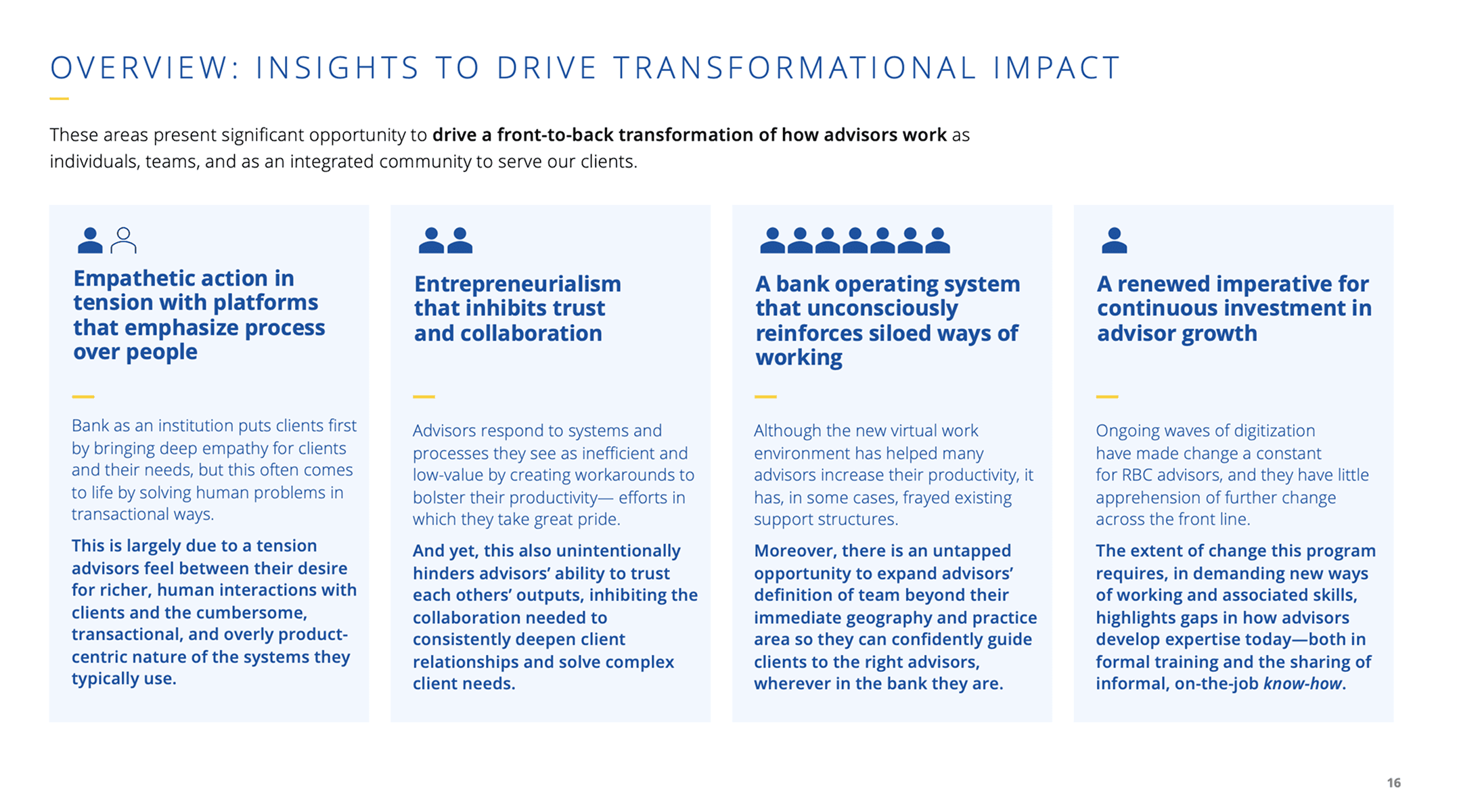
4 North Star insights
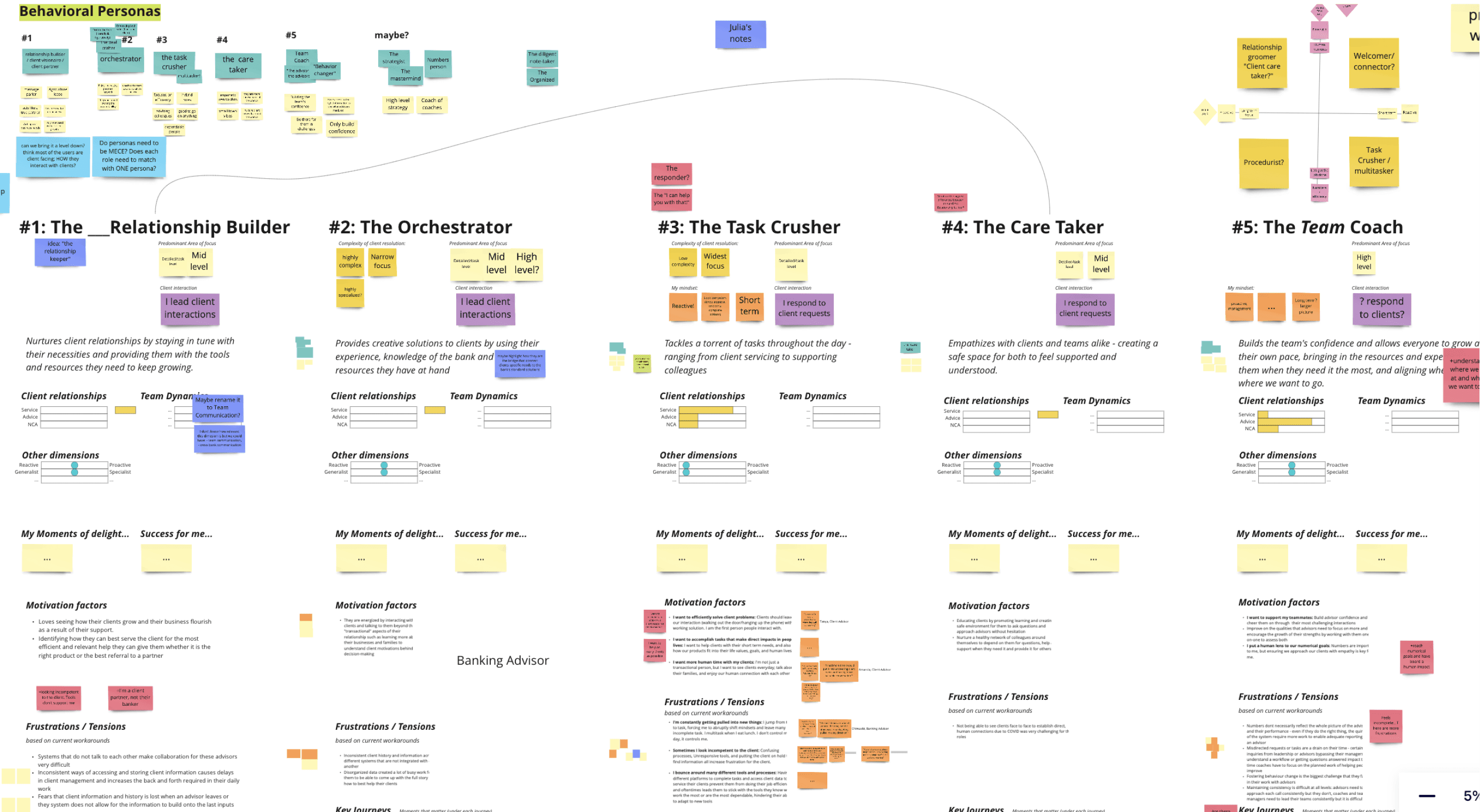
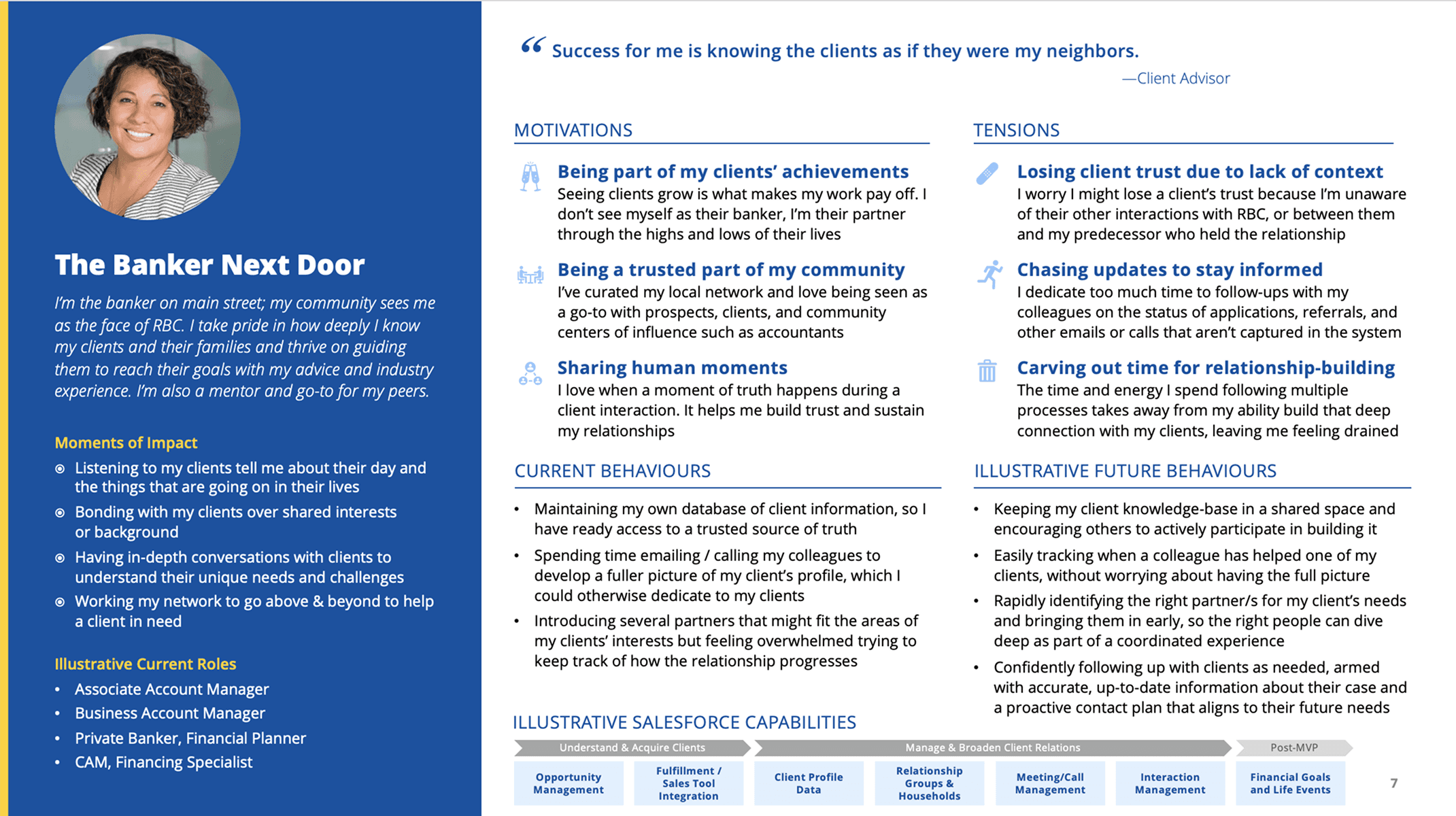
8 behavioral advisor personas
12 advisor journeys
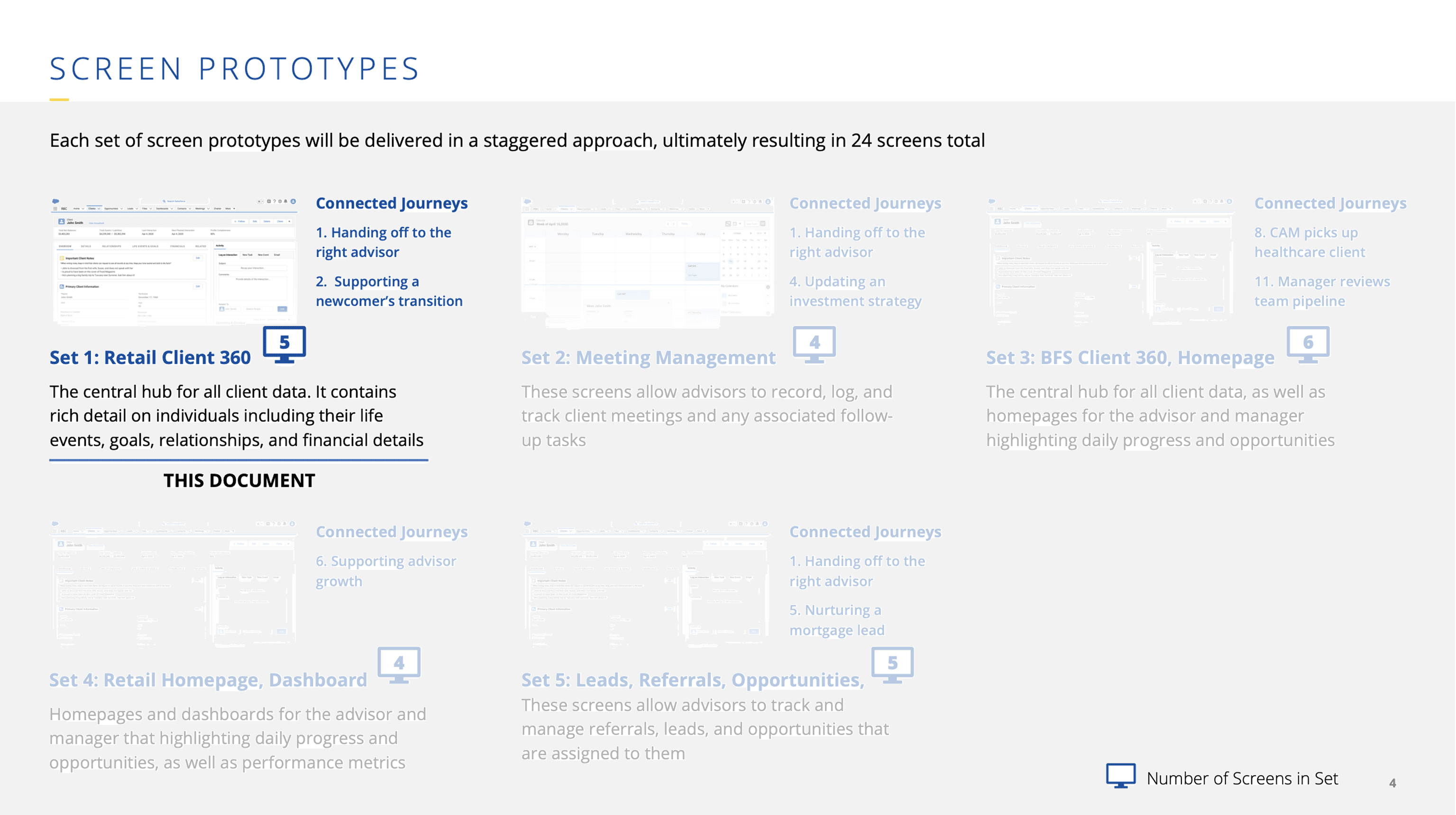
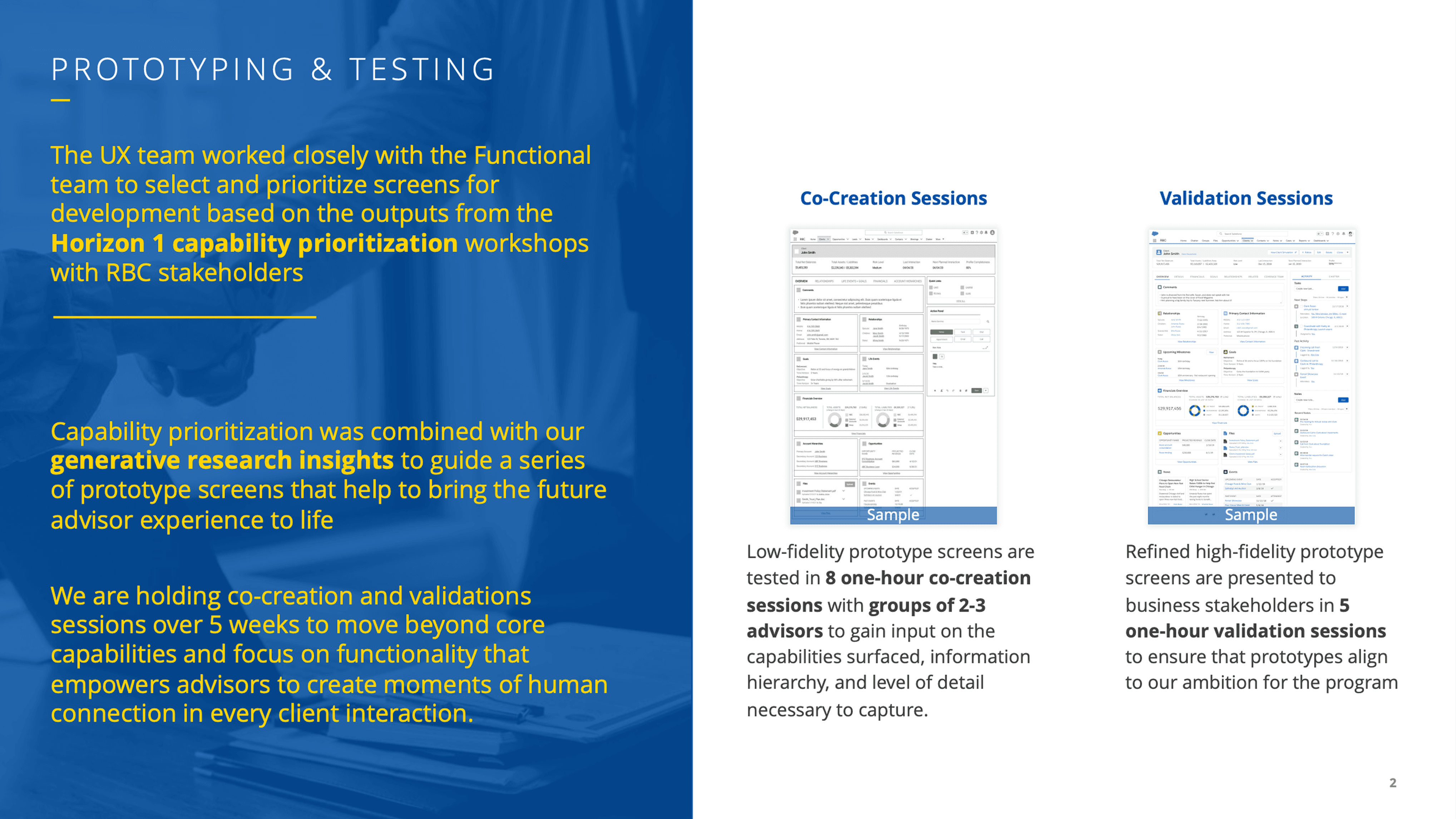
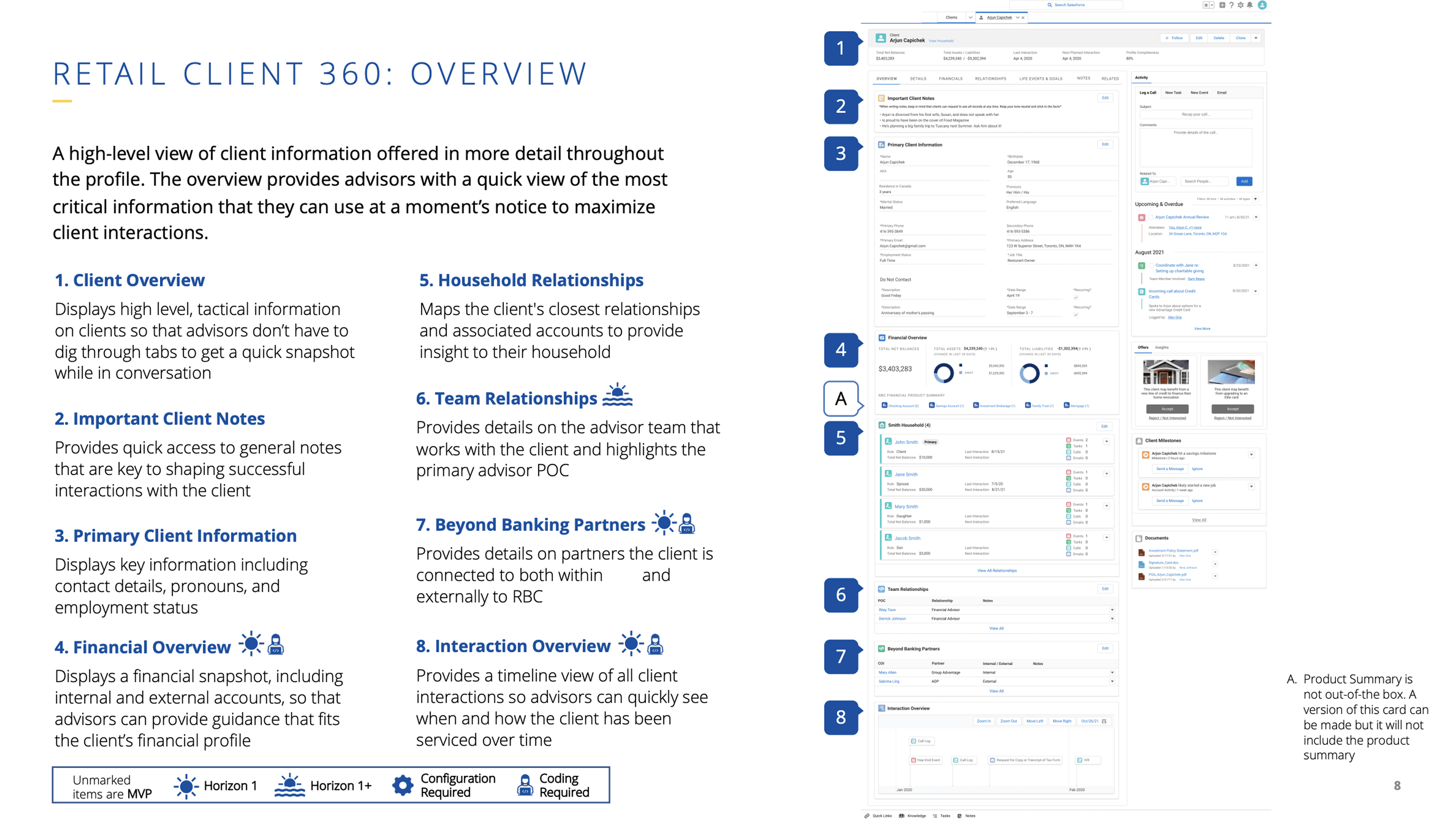
24 production ready wireframes
1 united team
Other Impact Highlights:
"North American Retail Bank of the Year" 3 consecutive years (Retail Banker International)
18 previously siloed stakeholders aligned across product, technology, change management, and business units
Instrumented to move: new business from existing clients, NBA completion rate, referral close rate, meeting and call management adoption
The Challenge and How I Adjusted My Approach
Navigating delicate constraints:
1. The research existed. The insight didn't. RBC had years of prior research on advisor pain points while I was coming in fresh with no time to duplicate it. → Shifted to behavioral and cultural research to find what the existing work had missed
2. I couldn't be everywhere at once. 8 personas and 12 journeys across 4 business units in 12 weeks was more than any one person could own. → Built scaffolding for a team of 6 to divide and stay aligned without losing coherence
3. The clients weren't working as one team. Siloed leaders were optimizing for their own unit's definition of success, not a shared outcome. → Eased them into collaboration by aligning on abstract principles first, then building toward tangible journeys and wireframes together
My Process and How I Carried Out The Work
Establishing the transformation
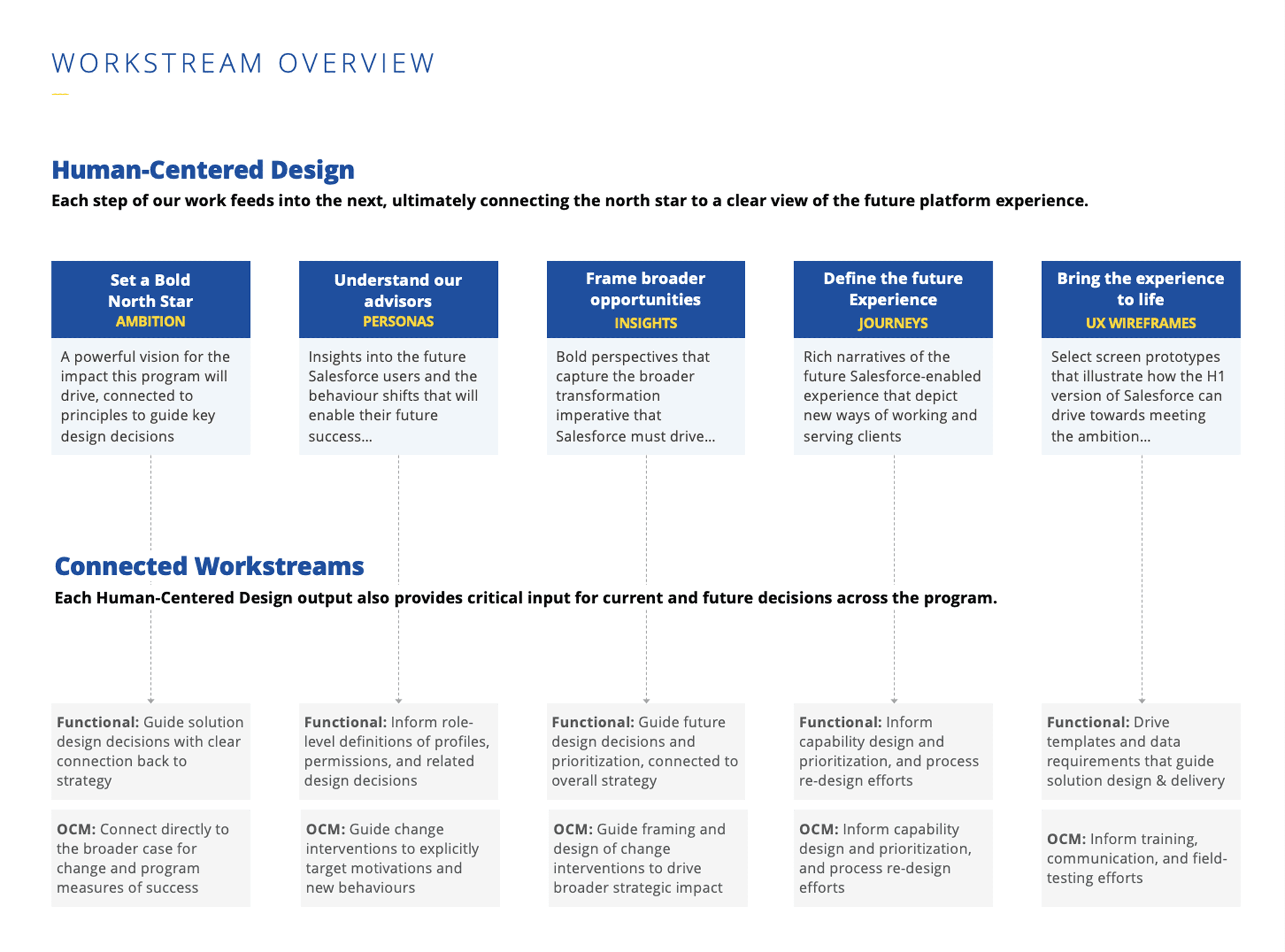
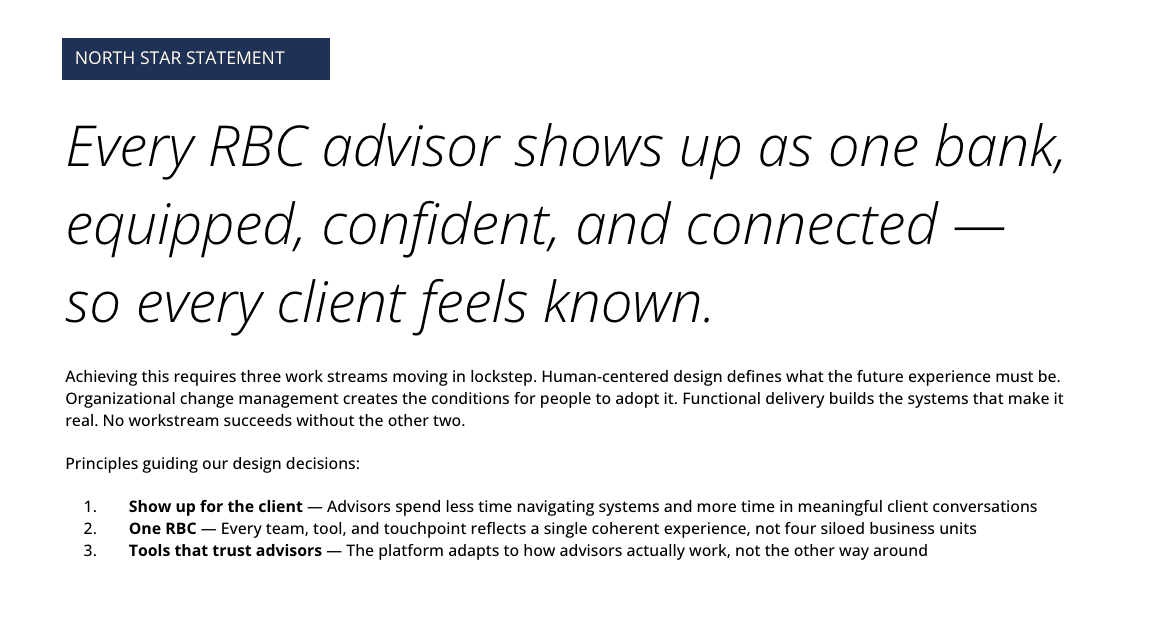
Building upon prior research
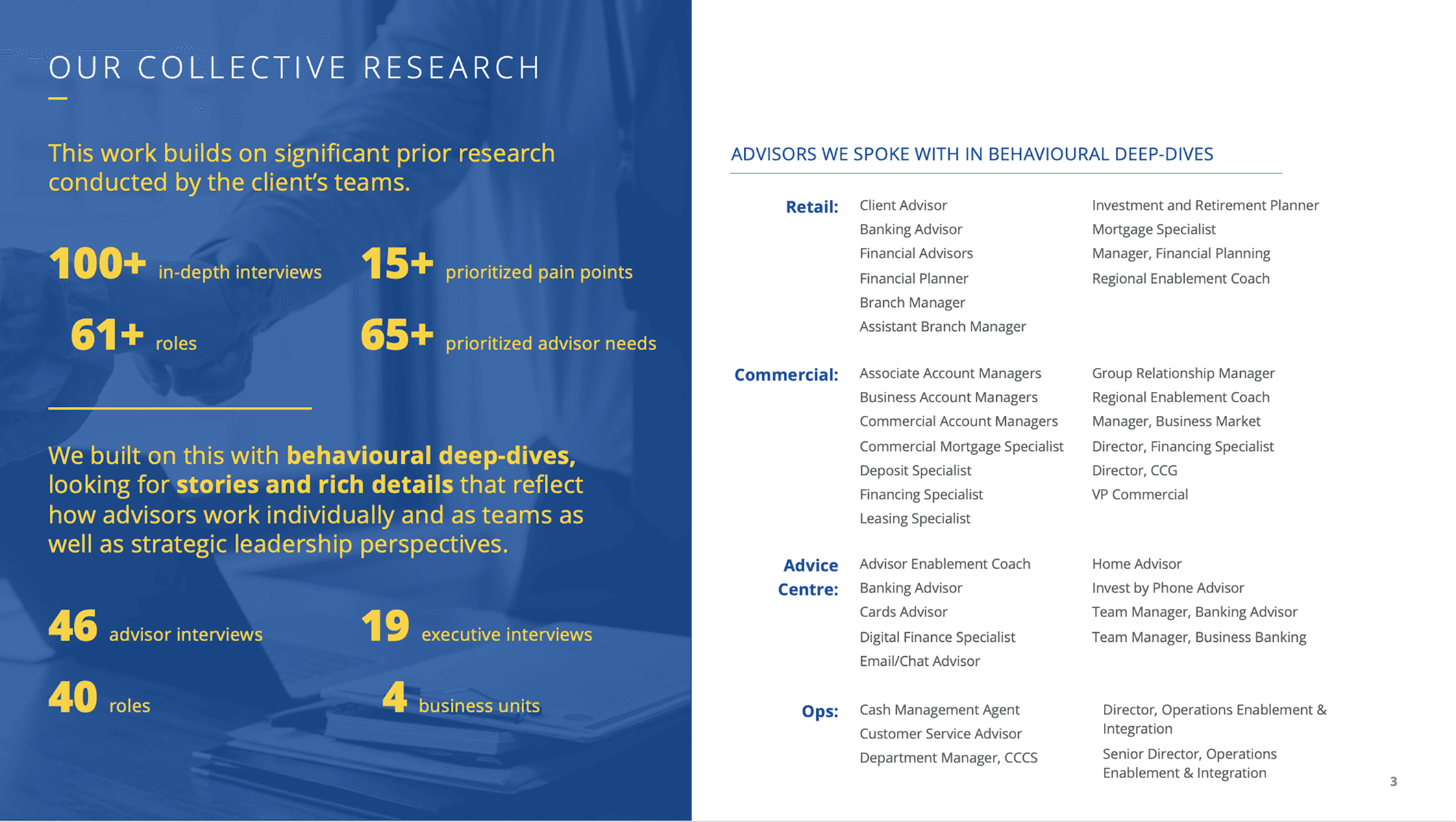
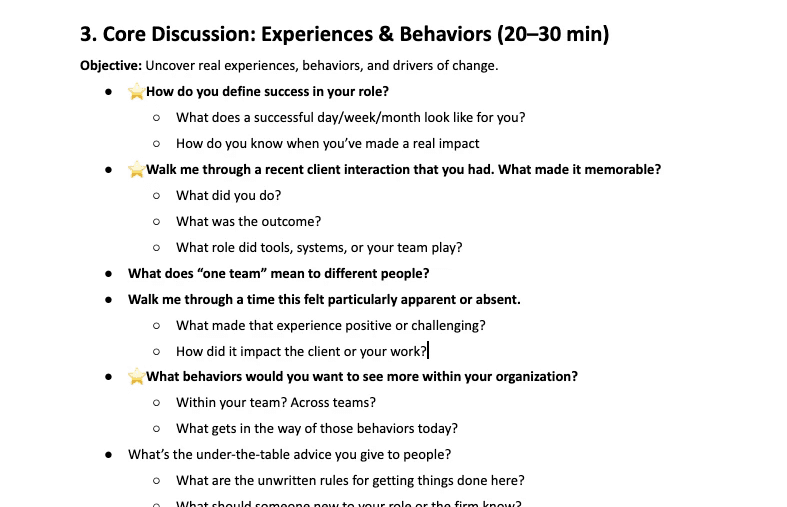
Framing insights as tensions, not finger pointing
Synthesizing 8 behavioral personas from interviews
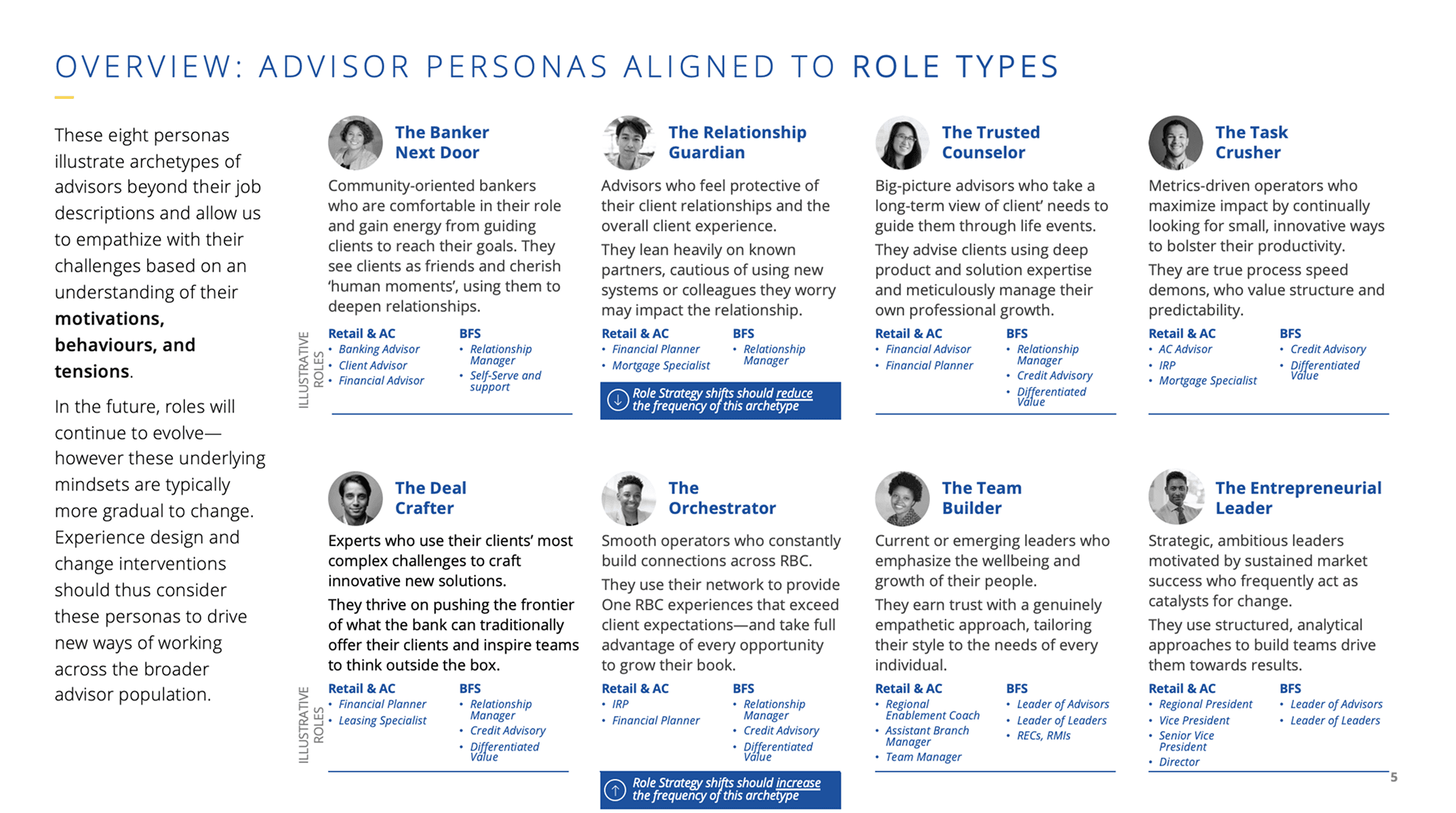
Banker next door persona
Selected advisor journeys that I built
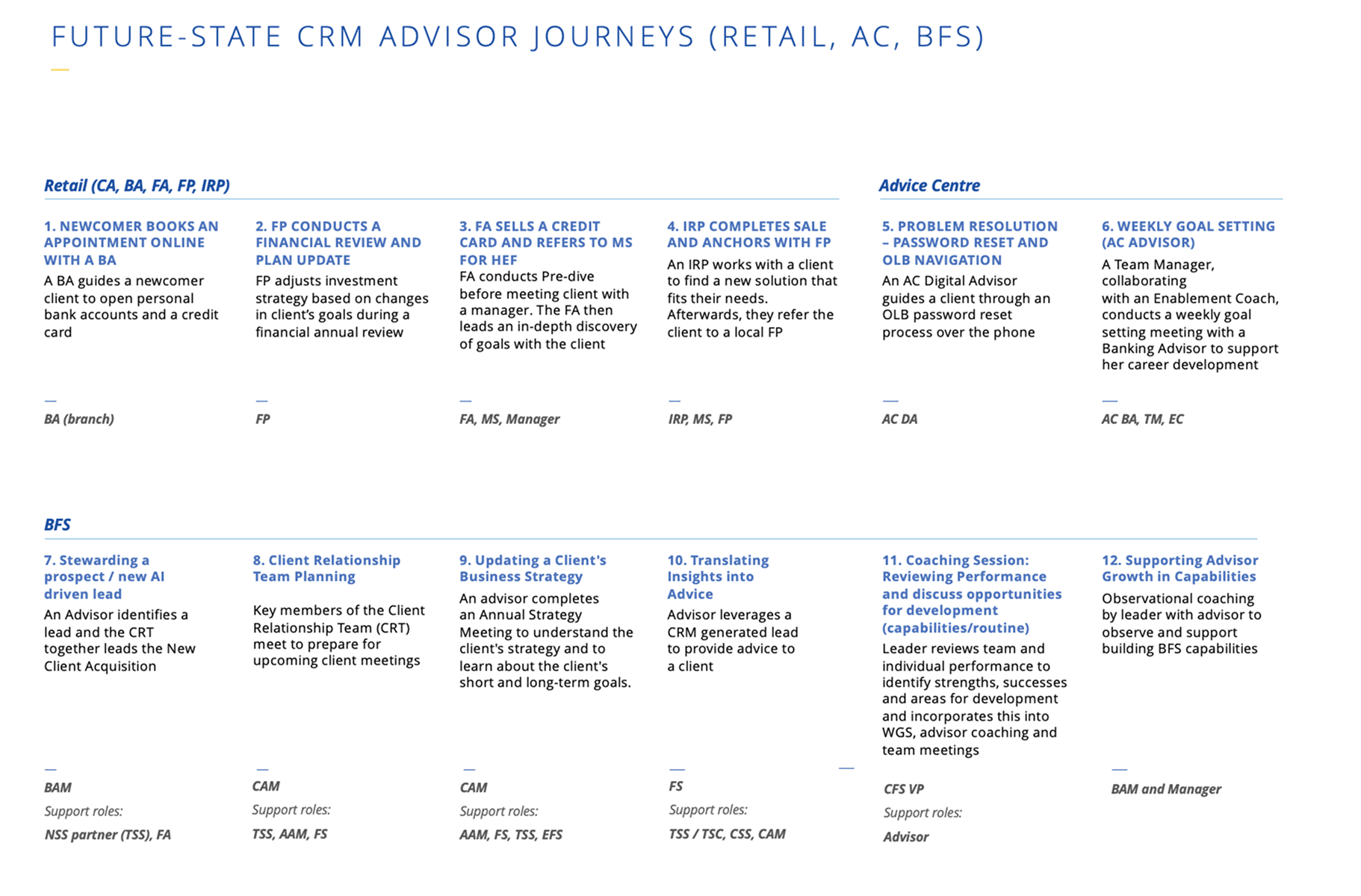
1 of 12 journeys that articulates the advisor experience (with persona), client impact moments, one RBC moments, key behavior changes, success metrics, & Salesforce capabilities (mapped to horizon 1, 2, 3)

Building productions ready wireframes with insights reflected in design
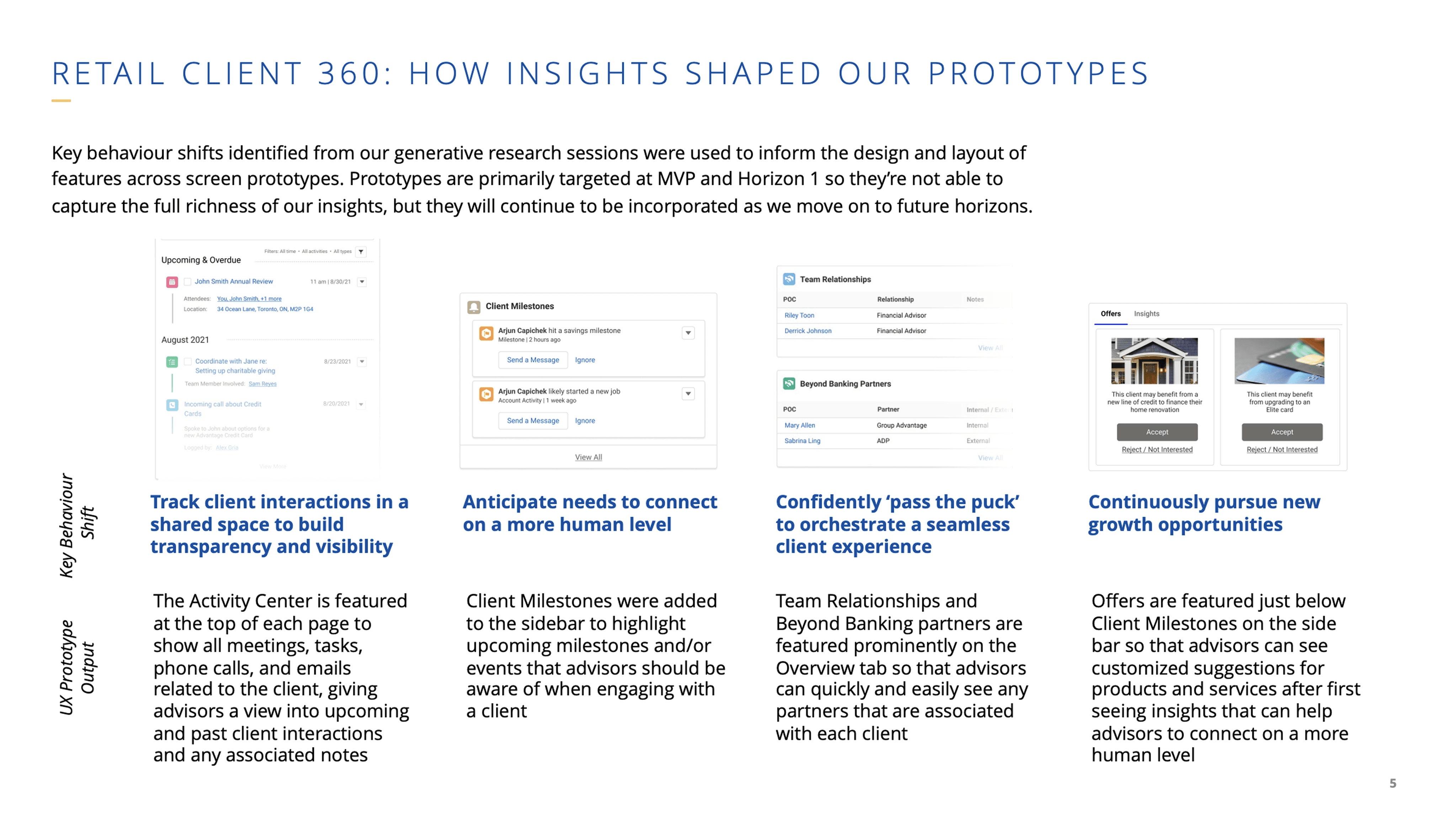
Afterwards
Metrics instrumented to move: new business from existing clients, NBA completion rate, referral close rate, meeting and call management adoption
Expanded scope mid-engagement: RBC requested 4 additional journeys
Method institutionalized: journey maps became the required artifact for every subsequent RBC transformation initiative aimed at the entire 36k advisor population
"This is the first time we've all gotten in the same room together. We are definitely going to work this way going forward" -RBC Director, Core Platform Evolution
What I Learned
While the core behavior changes I was designing for was were the end user 26k advisors, the real behavior change I was designing for were for client leaders to change. Creating the safe conditions for VPs, CRM product owners, CX Strategists, Tech Enablement, Advisor Practice Management Leads, and Program Leads to work together became the primary purpose of the journeys.