What If Human-Centered Design Isn't Actually Human Enough?
Practice Founding | Doblin | Deloitte-Digital
Human-centered design had become a default methodology and no one had questioned it in years. I did. I led a critical examination of whether our tools, methods, and research practices were actually serving the people they claimed to center — or quietly reinforcing the same inequities we were hired to fix. What followed was a new design practice co-founded from scratch: Ethos. Built on frameworks and field guides I designed, delivered across healthcare, financial services, HBCUs, and social platforms.
This is what design leadership looks like when the product is the practice itself.
100+
Designers in reflection
Co-founded
New practice area
5
Service offerings built
Field guide
Created for practitioners
The Challenge
HCD gave us a methodology, but not a conscience. We were generating insights about users while systematically misrepresenting communities, flattening complexity, and designing for the median. HCD's greatest strength, empathy for the individual, was also its blind spot: it couldn't see systems, power, or who wasn't in the room.
The practice needed a design intervention. But the hardest problem wasn't writing new frameworks. It was designing a room where 100+ designers felt safe enough to say "I've been doing this wrong," without defensiveness shutting everything down. That experience had to be designed before anything else.
What I Led
I designed the conditions for self-reflection before I asked anyone to change how they work. Designers are trained to solve problems for others, not examine themselves. Moving at the speed of trust, building psychological safety before introducing critique, was what made the practice stick.
My bet was that critique without a replacement is just noise. So I led the creation of tools practitioners could actually use on Monday morning: not theory decks, but actionable frameworks grounded in real project constraints. The goal was to meet designers where they were and give them a foothold, then gradually expand their frame.
The field guide was the core design artifact, not a training document, but a practitioner experience. I designed it to work the way good design does: meet people where they are, give them a foothold, then expand their frame. Principles, tactics, and storytelling elements structured so a junior designer on a fast-moving project could center equity goals without slowing down or needing a workshop first.
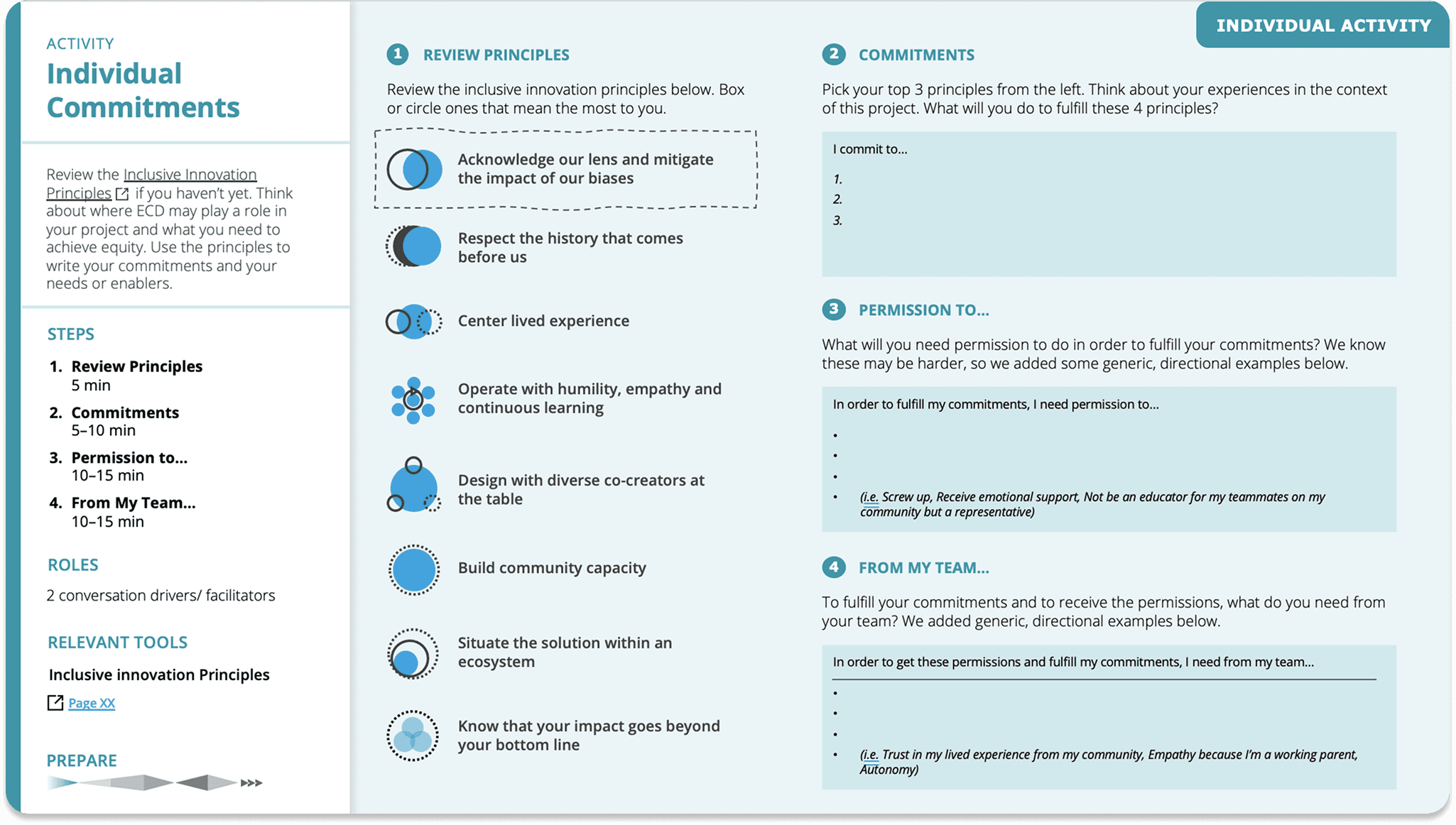
Practitioner field guide - principles, tactics, and storytelling elements for clients
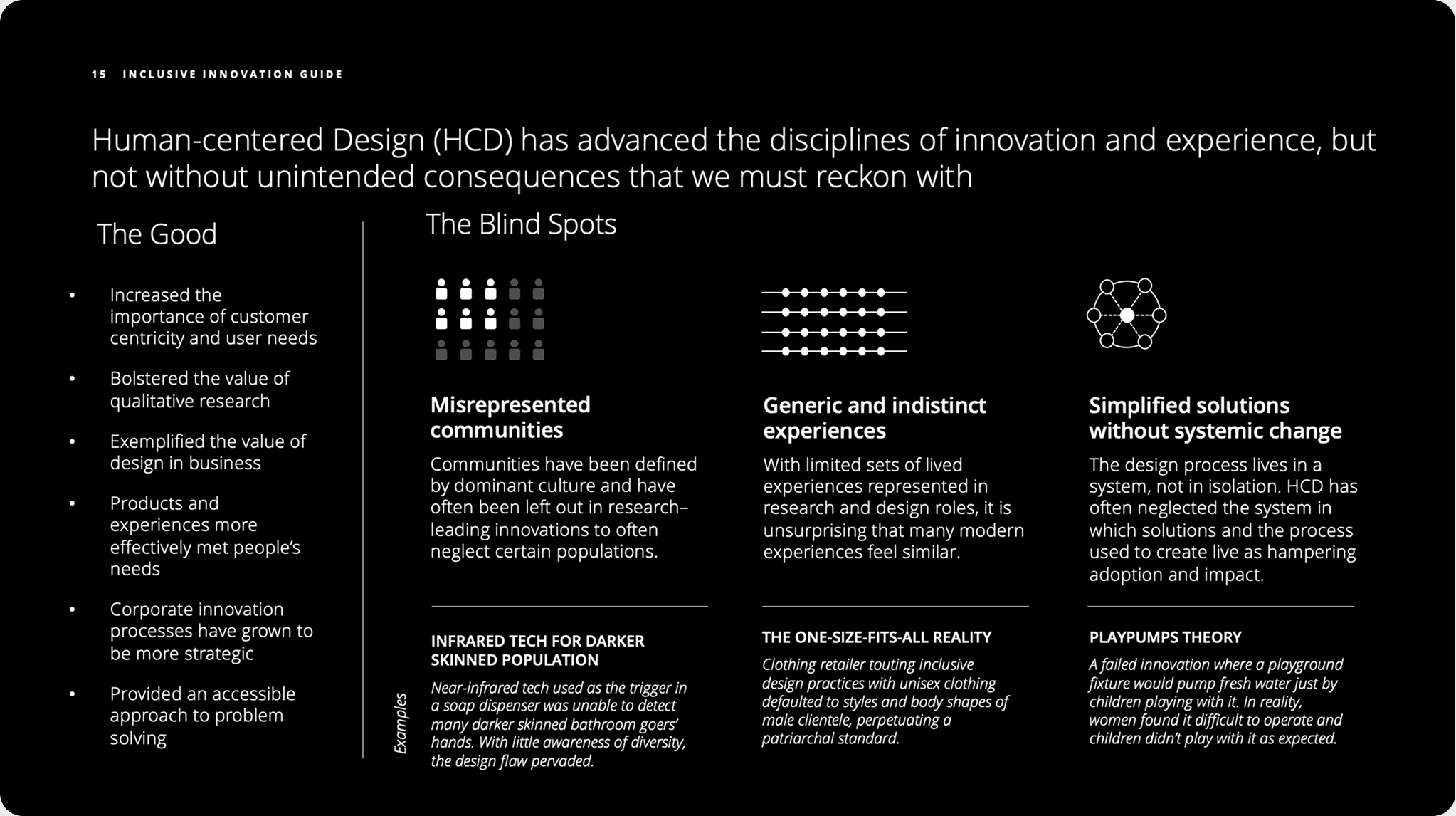
Equity-centered frameworks for internal and external stakeholders
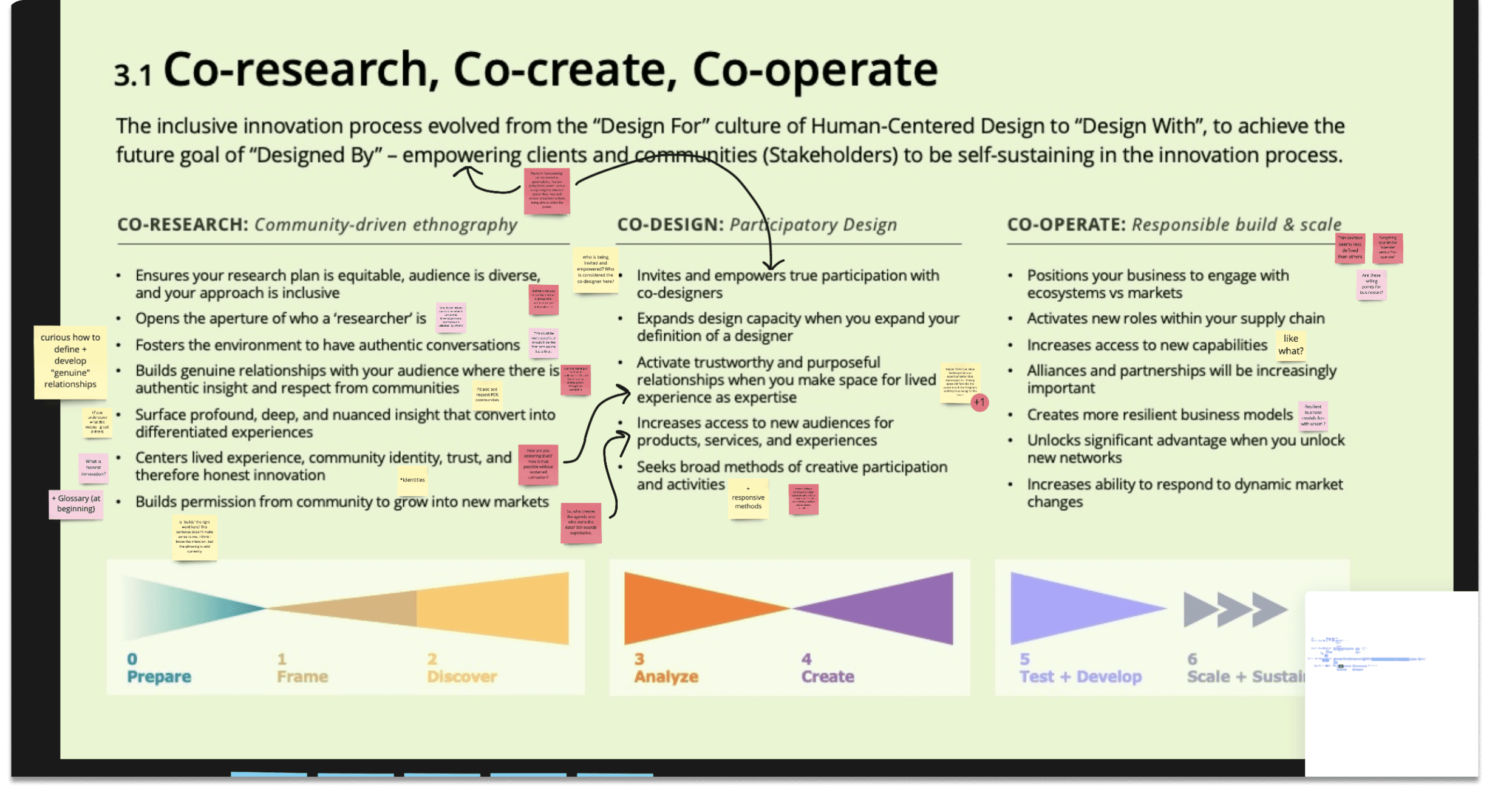
Facilitated reflection session — designing the conditions before the content
Outcomes
Ethos was announced as an official firm offering by the US Consulting Leader to the entire Customer & Marketing group, becoming a gateway to CMO, CXO, and Head of Product relationships. Client work spanned HBCUv (online education), equity in maternal health, social media platform accessibility, and retail DEI benchmarking. The field guide and reusable frameworks changed how 100+ designers think about their work, and continue to guide client projects across the practice.
"Kyle is a multi-talented designer, flexing skills across research, insights, design and storytelling. Kyle's ability to absorb a lot of inputs, go away, and return something coherent and thoughtful is in demand and always welcome on my teams." — Senior Manager, Deloitte Ethos
What I Learned
The most important design decisions here weren't visible in the final artifact. Sometimes the design work is: what happens in the first 10 minutes, who speaks first, what's on the wall when people walk in. Ethos taught me that design leadership means owning the conditions for good work, not just the deliverable.
The hardest problem wasn't the field guide or the frameworks, it was designing a room where 100 designers felt safe enough to say "I've been doing this wrong" and "Maybe there could be a better way?" That experience had to come first. Everything else followed.