From Taboo to CEO Keynote in 12 Months
AI Design | Northwestern Mutual
AI in client meetings was taboo at a 147-year-old Fortune 100. I shaped the end-to-end experience, from strategic positioning to enterprise launch, designing for one central insight: advisors don't fear AI, they fear looking incompetent in front of clients. That reframe changed everything.
AI in client meetings was taboo at a 147-year-old Fortune 100. I shaped the end-to-end experience, from strategic positioning to enterprise launch, designing for one central insight: advisors don't fear AI, they fear looking incompetent in front of clients. That reframe changed everything.
5,900+
5,900+
Advisors Onboarded
96.8%
96.8%
Satisfaction Rating
27 → 5.9k
27 → 5.9k
Pilot to Enterprise
CEO
CEO
Keynote Feature
The Challenge
Advisors wanted AI to focus on clients, not paperwork, but feared looking incompetent if AI "did their job." The central tension wasn't technological. It was identity. Advisors build their careers on judgment, not tools, and anything that appeared to replace that judgment would be rejected regardless of how useful it was.
At the same time, most stakeholders in the central home office were skeptical of AI and protective of the status quo. I needed to design for reducing friction without reducing autonomy, and build internal advocates before scaling.
Advisors wanted AI to focus on clients, not paperwork, but feared looking incompetent if AI "did their job." The central tension wasn't technological. It was identity. Advisors build their careers on judgment, not tools, and anything that appeared to replace that judgment would be rejected regardless of how useful it was.
At the same time, most stakeholders in the central home office were skeptical of AI and protective of the status quo. I needed to design for reducing friction without reducing autonomy, and build internal advocates before scaling.
What I Led
The core deliverable was a capability framework mapping every ALAI feature to advisor behavior across the call lifecycle — pre-call prep, live conversation, and post-call follow-through. This became the shared language between product, engineering, and the field, and the basis for roadmap prioritization.
I also designed the data annotation system that let advisors train the model over time, turning post-meeting review into a feedback loop that improved accuracy without adding friction.
The core deliverable was a capability framework mapping every ALAI feature to advisor behavior across the call lifecycle — pre-call prep, live conversation, and post-call follow-through. This became the shared language between product, engineering, and the field, and the basis for roadmap prioritization.
I also designed the data annotation system that let advisors train the model over time, turning post-meeting review into a feedback loop that improved accuracy without adding friction.
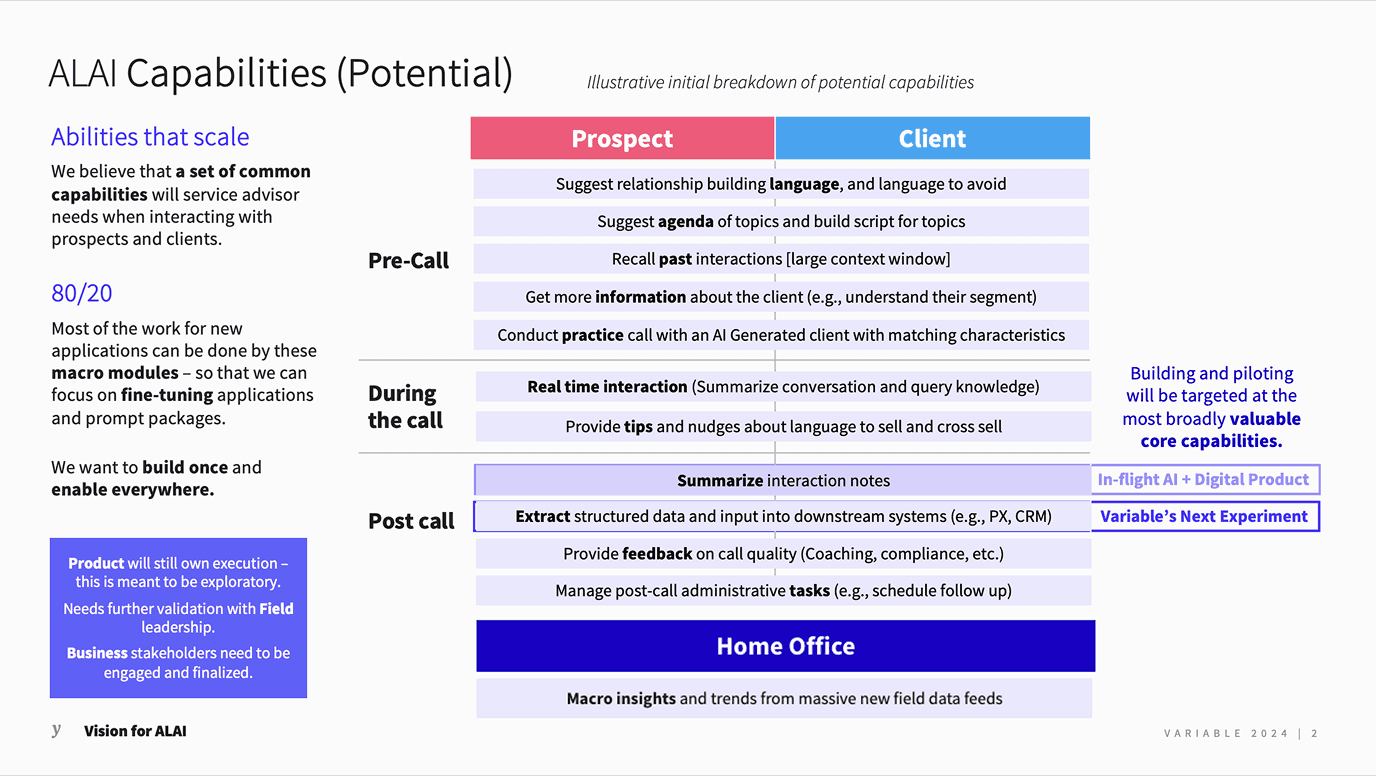
Capability Prioritization
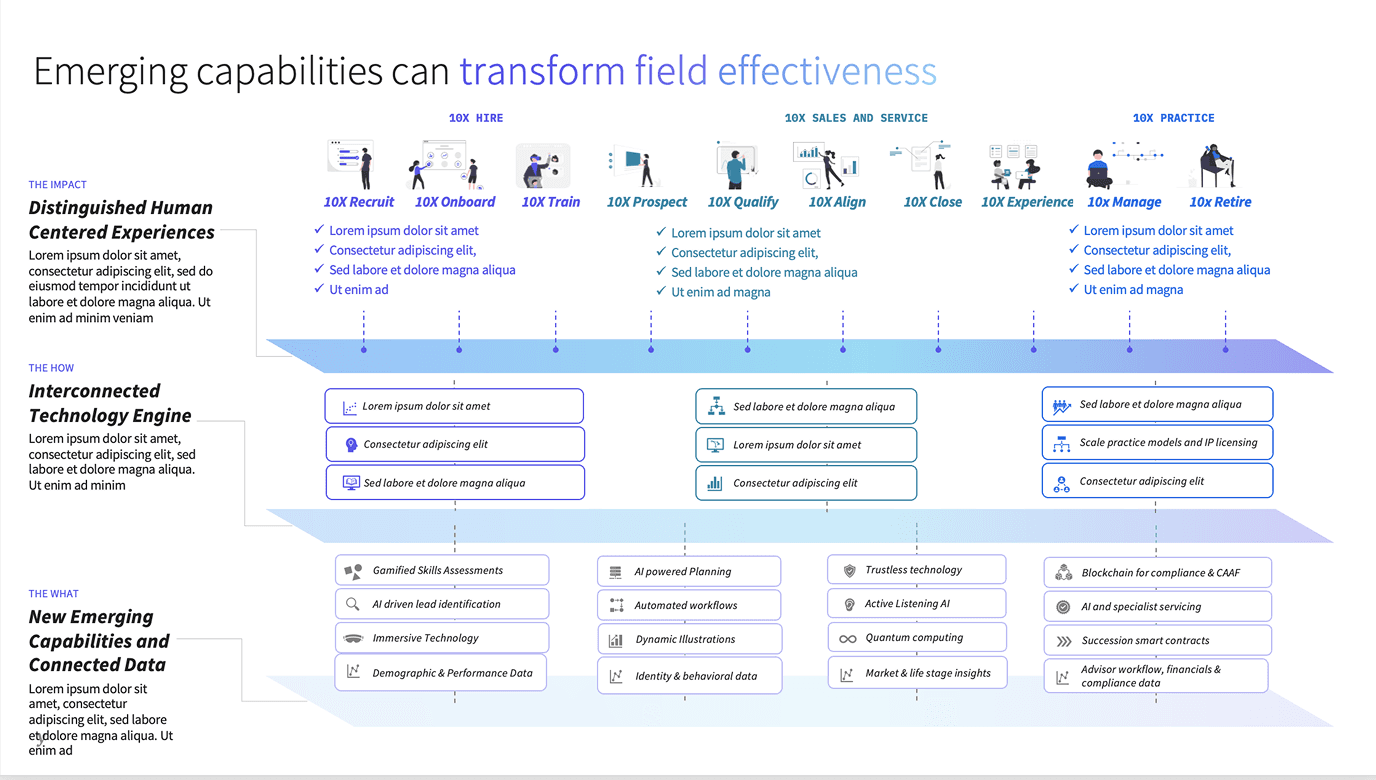
Emerging Capabilities mapped to field Effectiveness
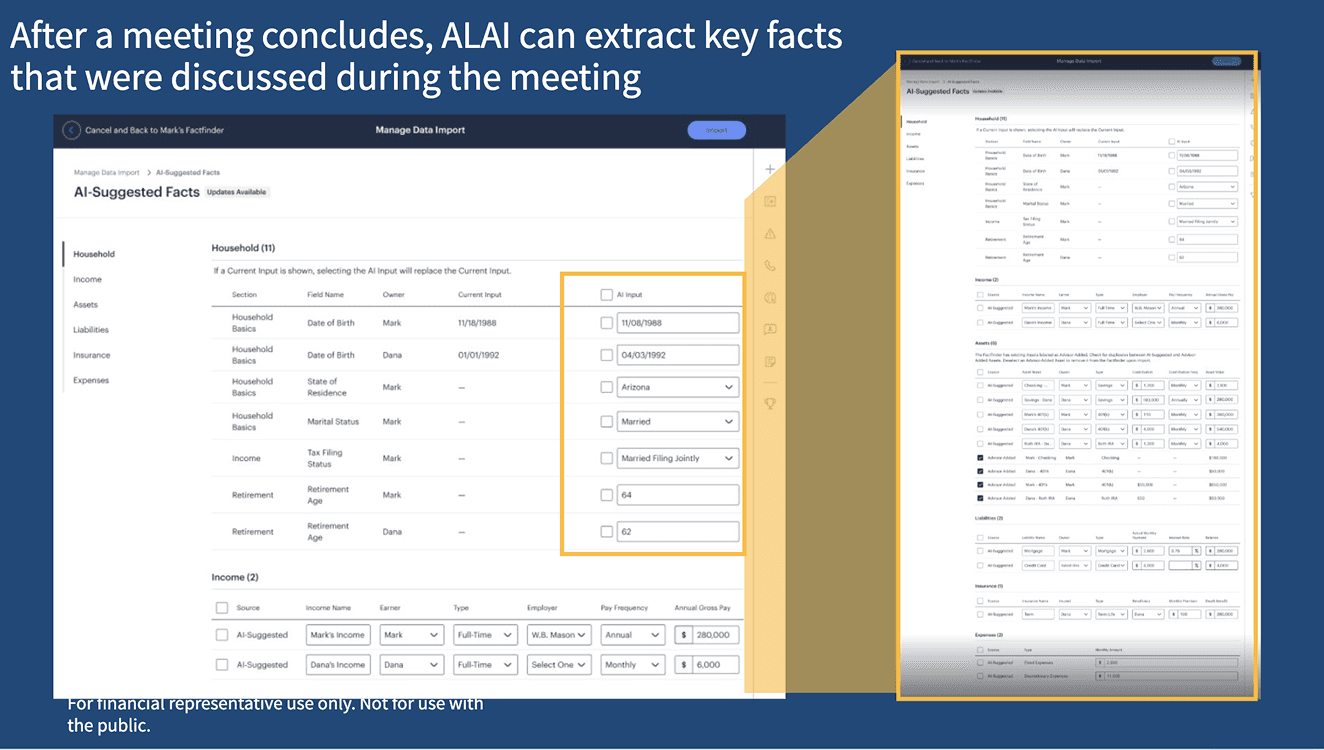
Extracting key Discussion Facts
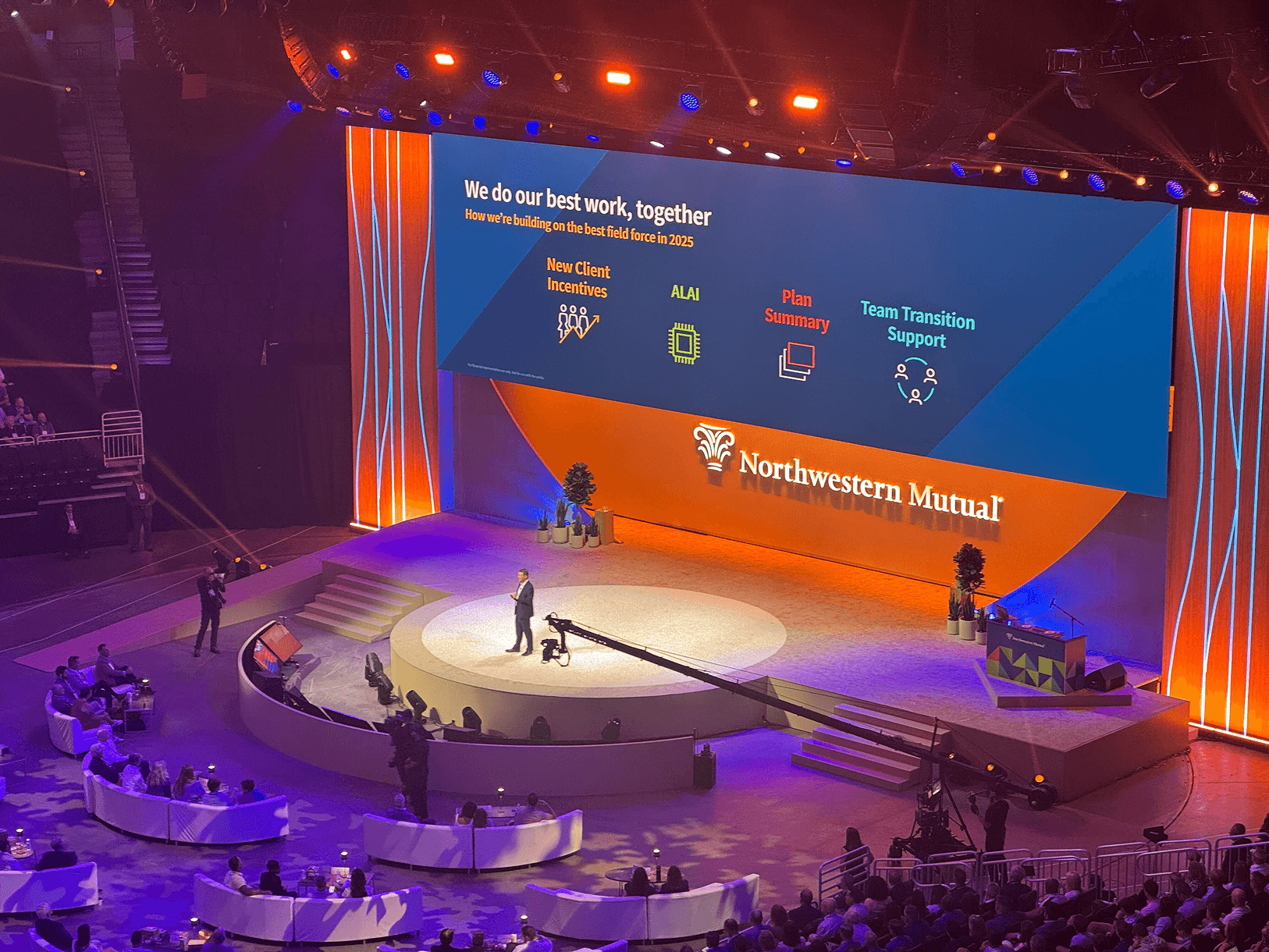
CEO Tim Gerund presenting to field force on ALAI
Outcomes
The product reached 5,900+ advisors in 12 months, with a 96.8% satisfaction rating. What started as a 27-person pilot scaled to enterprise adoption company-wide. The CEO featured ALAI in the annual keynote — shifting internal perception from risk to competitive advantage. The innovation team was restructured to accelerate AI capabilities, using the platform as the foundation for future advisor intelligence investment.
The product reached 5,900+ advisors in 12 months, with a 96.8% satisfaction rating. What started as a 27-person pilot scaled to enterprise adoption company-wide. The CEO featured ALAI in the annual keynote — shifting internal perception from risk to competitive advantage. The innovation team was restructured to accelerate AI capabilities, using the platform as the foundation for future advisor intelligence investment.
What I Learned
The real design problem wasn't the interface — it was the mental model. Advisors weren't protecting a professional identity built around human judgment. Once I designed for that, the product followed. The org change followed the design insight, not the other way around.
The real design problem wasn't the interface — it was the mental model. Advisors weren't protecting a professional identity built around human judgment. Once I designed for that, the product followed. The org change followed the design insight, not the other way around.